Review: Future Engineer – Kids Gear Design
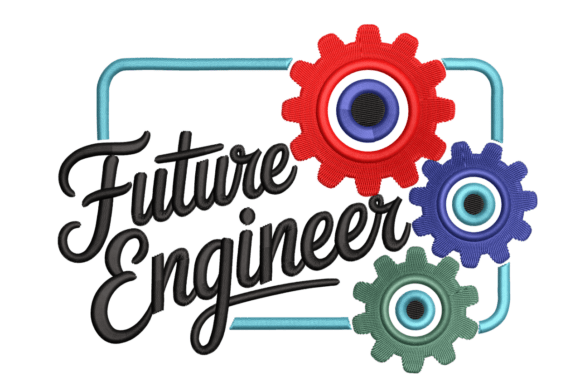
As an embroidery designer who has spent years digitizing and testing files for small business clients, I approach every new machine embroidery design with a critical eye. It is not just about whether the image looks cute on a screen; it is about how that digital embroidery file performs under the needle, how it holds up after washing, and most importantly, how it serves the brand identity of the business using it. Recently, I reviewed Future Engineer – Kids Gear, a bold, industrial-themed design featuring gears and a frame. Here is my professional assessment of its viability for commercial use.
First Impressions: Bold and Industrial Appeal
The first thing that strikes you about Future Engineer – Kids Gear is its structural confidence. The description highlights "gears and frame" elements, which immediately suggests a mechanical, sturdy aesthetic. For a design categorized under School and Embroidery, this is a refreshing departure from the typical soft, pastel motifs often found in children’s apparel. The text is rendered in a thick, substantial font, which is a crucial detail for durability. In my experience, thin, wispy lettering tends to break down or get lost in the fabric pile after repeated laundering. This design feels premium and playful simultaneously, striking a balance that appeals to parents who want to celebrate a budding talent without sacrificing a modern, clean look.
Visually, the industrial theme gives it a versatile edge. It does not feel exclusively tied to one gender or age group, making it a strong candidate for various small business merch lines. Whether used for a STEM camp uniform, a robotics club hoodie, or a boutique baby shower gift, the design projects competence and creativity. It feels professional enough for branded merchandise yet friendly enough for a child’s wardrobe.
Real-World Business Applications
When evaluating a design for commercial embroidery, I always ask: "Where does this live on the product?" Future Engineer – Kids Gear offers several high-value applications for apparel decorators and handmade brands.
- Embroidered Patches: This is perhaps the strongest use case. The framed nature of the design makes it ideal for cut-edge or merrowed border patches. A patch allows for greater flexibility, as customers can iron or sew it onto existing jackets, backpacks, or hats. This increases the perceived value of the finished product.
- Cap Embroidery: Placed on the front panel of a structured cap, the bold lettering and gear icons can serve as a standout logo accent. However, curvature is key here, which I will address in the technical notes below.
- Apron Embroidery: For creative studios, maker spaces, or even family-oriented bakeries offering kids' classes, this design works beautifully on canvas or denim aprons. It reinforces the idea of "building" and "creating," aligning perfectly with the brand identity of hands-on businesses.
- Tote Bag Design: A canvas tote featuring this motif makes for an excellent back-to-school item or library bag. The industrial gears contrast nicely with the soft texture of cotton canvas, creating a tactile and visual interest that elevates a simple bag into a statement piece.
- Custom Apparel: Beyond standard t-shirts, consider this for polo shirts for youth engineering clubs or science fairs. The design acts as a badge of honor, fostering a sense of belonging and pride among young participants.
Strategic Placement and Cautionary Notes
While the design is robust, there are specific scenarios where caution is required. As a designer, I have seen many promising projects fail due to poor placement choices. Here is where you need to be careful with Future Engineer – Kids Gear:
- Small Patch Sizes: If you intend to shrink this design for a tiny chest logo or a small label, you must check the stitch density. Complex gear teeth can merge together if scaled down too far, losing definition. Always test a minimum size sample before offering it as a micro-detail option.
- Curved Surfaces: When applying this to cap fronts or sleeve cuffs, the rigid frame elements might cause puckering if the stabilizer is not adequate. The "frame" aspect implies straight lines, which can distort on highly curved fabrics if not hooped correctly.
- Textured Fabric: On fluffy towels or heavy fleece, the finer details of the gears might get swallowed by the nap. In these cases, increasing the stitch count or using a topping stabilizer is essential to maintain clarity.
- Dark Uniforms: If stitching on dark navy or black uniforms, ensure your thread colors have sufficient contrast. The industrial theme often lends itself to metallic or grey threads, which may vanish against dark backgrounds unless outlined properly.
Impact on Brand Identity and Customer Trust
Using a cohesive, high-quality design like Future Engineer – Kids Gear directly influences customer trust. When a parent buys a shirt or a patch for their child, they are buying into an identity. They want their child to feel smart, capable, and inspired. A sloppy, poorly digitized design undermines that message. Conversely, a crisp, well-executed embroidery job signals professionalism. It tells the customer that the brand cares about quality.
For Etsy sellers and craft businesses, consistency is vital. If this design is part of a larger collection of STEM-themed assets, it helps create a recognizable visual language. Customers begin to associate that specific industrial-gear aesthetic with your brand. This recognition drives repeat business and enhances the perceived value of your handmade product offerings. It transforms a simple transaction into an emotional connection with the buyer’s aspirations for their child.
Practical Designer Notes for Production
Before you load this file into your machine for a large batch of commercial embroidery, follow these practical steps to ensure success:
- Test in Black and White First: Stitch out the design using only black thread on white fabric. This reveals the true structure of the digitizing, allowing you to spot any gaps, overlaps, or density issues without the distraction of color.
- Check Thread Color Contrast: Once the structure is verified, experiment with thread combinations. Metallic gold or silver threads can enhance the "gear" effect, but ensure they do not break easily. High-quality rayon or polyester threads are recommended for durability.
- Confirm Hoop Size: The product description does not specify exact dimensions. You must verify the hoop size required. Ensure your machine can accommodate the frame without re-hooping, which can lead to alignment errors.
- Use Proper Stabilizer: Given the likely density of the gears and text, a medium-weight cut-away stabilizer is usually safest for knit fabrics like t-shirts. For woven fabrics like tote bags or caps, a tear-away might suffice, but test first.
- Create a Printable Mockup: Before selling, create a printable mockup or a digital composite showing the design on various items. This helps clients visualize the final result and reduces return requests due to mismatched expectations.
- Verify Commercial Licensing: Always confirm the license terms included with the embroidery file. Ensure you have the right to use it for physical goods sold in your shop. Never assume; always read the terms.
In conclusion, Future Engineer – Kids Gear is a strong contender for small business merchandise. Its bold, industrial aesthetic offers a unique angle in the children’s market, moving away from generic themes toward something more empowering and structured. By paying attention to stitch density, fabric choice, and placement, you can leverage this design to create high-value, professional-grade products that resonate with modern parents and educators. Treat it as a core asset in your design assets library, and it will likely become a staple in your custom apparel lineup.